Nirvana Ming Palace: A realm of tranquility where culture meets art
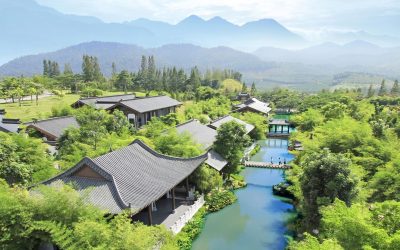
Covering an area about 30,000 square feet, Nirvana Ming Palace is located at Nirvana Memorial Park (Shah Alam).
The overall architectural style of Ming Palace is inspired by the designs of palaces from the Ming dynasty era. Every brick and every sculptural detail of the complex convey the essence of that time period. As such, a visit to Ming Palace with its recreated old-world timber pavilions and stone pavements is like a journey back in time to the prosperous bygone heydays of China’s Ming dynasty.
One of the most impressive features of imperial palaces are the towering vermilion walls. Vermilion in Chinese culture, is symbolic of celebration, happiness and good fortune. In ancient times, the usage of colours were strictly regulated. Only the homes of the imperial family can be painted in red to highlight the nobility and majesty of the emperor, while the laypeople can only use colours such as black or grey. Additionally, the decorations on the eaves of Ming Palace use blue as the base and depict exquisite golden dragons and auspicious clouds as motifs to convey imperial prestige. Luminous and dignified, it elevates the elegance and beauty of the overall design.

Amidst the striking vermilion and blue, a dash of green is added to create a sense of overall depth and space. Green also symbolizes the Green Dragon which represents the direction of the east where the sun rises; therefore, embodying the hope of transcendence.
In constructing a house or even a palace, the Chinese not only seek to create beautiful and imposing architecture, but also places great consideration into Feng Shui in terms of layout. Ming Palace takes the flow of mountains and rivers as the main factor in the composition of structures and buildings are framed amidst verdant forests in the embrace of water in what can only be described as a heavenly display. From perspective, the Ming Palace complex is laid out in an “embrace”, with Ming Palace 3 located centrally facing a great Buddha with Ming Palace 1 and 2 flanking both sides. Such a layout not only has the potential to protect from the wind and gather Qi but is also the Feng Shui formation that denotes the emperor.
Ming Palace 3 is also named the Chamber of Eternal Bliss in honour of the Ming dynasty emperor, Zhu Di whose reign reached an unprecedented level of prosperity and was thus given era name “Yongle”, meaning “Eternal Bliss”.
The first impression visitors would have upon entering the Chamber of Eternal Bliss is that they are in the “Brahma Palace” of Wuxi, China. With its magnificent art and unique Buddhist heritage, the Brahma Palace is famed for its cultural elements, making it the most emblematic Buddhist art gallery in China. It has been called the “Louvre of the East” by international media.

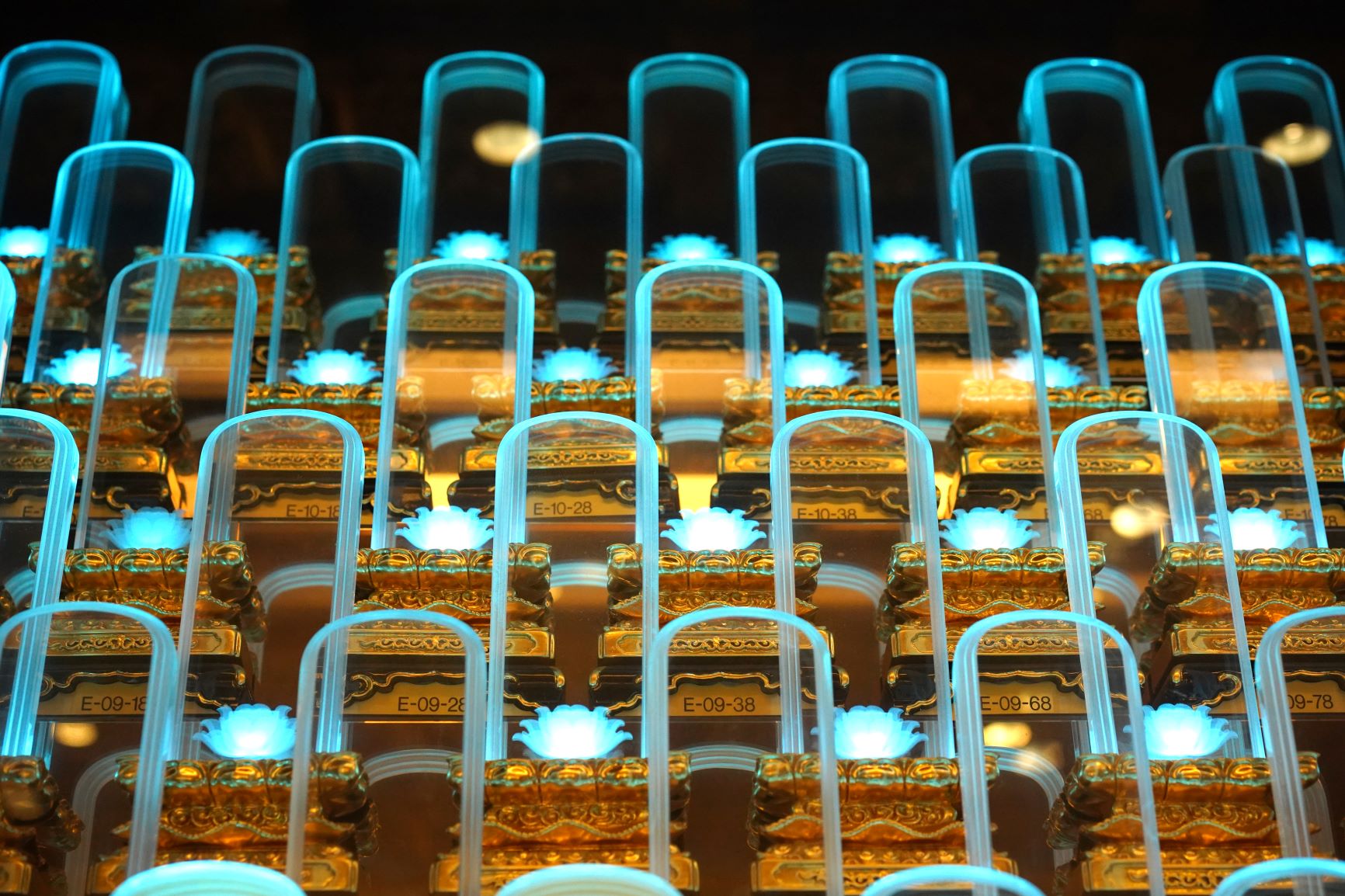
Built at a cost RM100 million, the Chamber of Eternal Bliss was designed to incorporate elements of the Brahma Palace’s design and recreate the artistic craftsmanship of the Aisle Hall. The Chamber of Eternal Bliss has a soaring hall with a rectangular caisson ceiling adorned with ornate and exquisite sculptural reliefs of lotus blossoms. The LED lighting system illuminates the the entire upper levels, creating a beautiful space that exudes wonder and majesty.
The lower hall is furnished with exquisite furnishings, comfortable and spacious lounge chairs and is fully air-conditioned; allowing visitors to take a break in a relaxed yet elegant environment.
The interior of the Chamber of Eternal Bliss features a mainly yellow theme which provides visitors with an impression of gold and splendour. However, in ancient times, yellow has a deeper significance. In addition to being the colour that represents imperial opulence, yellow represents “earth” which is the essence of all things. As such, the emperor is the essense of all people and thus also represents the supreme imperial power. Furthermore, in terms of the Five Elements of Yin and Yang, the yellow “earth” is paired with the red “fire” and “fire” produces “earth”, symbolizing nurture and growth.


Ming Palace is the convergence of architecture, Buddhism and culture. From the mandara caisson ceiling, Three Western Saints, apsaras, Buddhist statues and Zen spiritualism, to the eight cultural pillars depicting the Hundred Surnames of the Chinese, the idea of Buddhism and culture is integrated into the whole breathtaking complex and executed to the fullest extent.
From its exterior to its interior, the Ming Palace displays the immortal artistry and wisdom of thousands of years worth of Chinese culture. The attention-to-detail layout of Ming Palace makes it not only serene columbarium, but an excellent and wonderful example of Chinese culture and humanistic history. Just like history, when the finite mortal existence comes to an end, a new chapter begins.

What are the differences between longevity extension and prayers for blessings talisman paper, enlightenment ceremony spirit talisman paper, and joss paper?
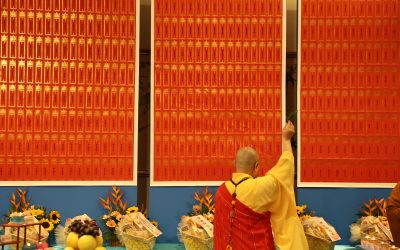
At Nirvana-related ritual ceremonies, red talisman papers are dedicated for the living during the “Medicine Buddha Calamities Dispelling, Longevity Extension and Prayers for Blessings Ceremony” to pray for life extension and enhancing fortune; while yellow enlightenment ceremony spirit talisman paper are used for spirit altars for the liberationt of the deceased. Both of these papers require the writing of a name. Joss papers, on the other hand, are offered as currency for the afterlife and do not require a name to be written on it.
What does a bereavement care services company do?
Nirvana Asia Group operates a 24-hour service careline. When bereaved families reach out to us, our personnel will gather essential information — such as the place of death, religious beliefs, the preferred location for funeral arrangements, and any specific family requirements — and walk them through every subsequent step. If a pre-need funeral plan (Nirvana Life Plan) is already in place, we will assist in verifying the relevant details.
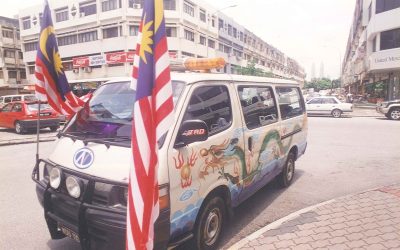
What leads the way is not just a vehicle —it is an entire industry
The vehicle at the very front of a funeral procession is what we call the “dragon hearse.” It is the lead vehicle, responsible for clearing the path and guiding the route, allowing the coffin hearse and the funeral procession behind to follow.

How to Apply for a Death Certificate in Malaysia: Required Documents and Collection Guidelines
Following the passing of a loved one, the death must first be verified by a hospital or relevant authority. Once the family has obtained the necessary documentation, they must follow the prescribed procedures to register the death and collect the Death Certificate. Known in Malay as “Sijil Kematian”, the Death Certificate is issued by the National Registration Department (Jabatan Pendaftaran Negara or JPN). It serves a different purpose from a Burial Permit or a Medical Certificate of Cause of Death.
Throughout Nirvana Asia Group’s journey, the only constant has been continuous evolution.
In the early days of Malaysia’s funeral industry, services largely adhered long-established practices. As times and lifestyles changed, people’s expectations for life’s final journey began to differ. Amid these changes, Nirvana Asia Group has gradually improved the overall funeral service experience — from transport, etiquette, and spaces to service processes.
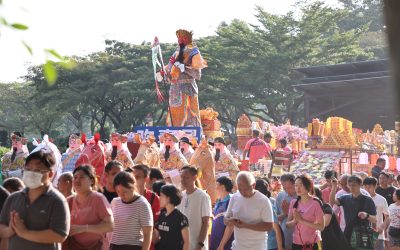
What is the Enlightenment Ceremony?
In Buddhism, the Enlightenment Ceremony refers to rituals — such as the teaching of Dharma, chanting of sutras, recitation of the Buddha’s name, and the performance of meritorious deeds — dedicated to helping the deceased transcend suffering, attain happiness, and be reborn in a favourable realm.