Nirvana Ming Palace: A realm of tranquility where culture meets art
Covering an area about 30,000 square feet, Nirvana Ming Palace is located at Nirvana Memorial Park (Shah Alam).
The overall architectural style of Ming Palace is inspired by the designs of palaces from the Ming dynasty era. Every brick and every sculptural detail of the complex convey the essence of that time period. As such, a visit to Ming Palace with its recreated old-world timber pavilions and stone pavements is like a journey back in time to the prosperous bygone heydays of China’s Ming dynasty.
One of the most impressive features of imperial palaces are the towering vermilion walls. Vermilion in Chinese culture, is symbolic of celebration, happiness and good fortune. In ancient times, the usage of colours were strictly regulated. Only the homes of the imperial family can be painted in red to highlight the nobility and majesty of the emperor, while the laypeople can only use colours such as black or grey. Additionally, the decorations on the eaves of Ming Palace use blue as the base and depict exquisite golden dragons and auspicious clouds as motifs to convey imperial prestige. Luminous and dignified, it elevates the elegance and beauty of the overall design.

Amidst the striking vermilion and blue, a dash of green is added to create a sense of overall depth and space. Green also symbolizes the Green Dragon which represents the direction of the east where the sun rises; therefore, embodying the hope of transcendence.
In constructing a house or even a palace, the Chinese not only seek to create beautiful and imposing architecture, but also places great consideration into Feng Shui in terms of layout. Ming Palace takes the flow of mountains and rivers as the main factor in the composition of structures and buildings are framed amidst verdant forests in the embrace of water in what can only be described as a heavenly display. From perspective, the Ming Palace complex is laid out in an “embrace”, with Ming Palace 3 located centrally facing a great Buddha with Ming Palace 1 and 2 flanking both sides. Such a layout not only has the potential to protect from the wind and gather Qi but is also the Feng Shui formation that denotes the emperor.
Ming Palace 3 is also named the Chamber of Eternal Bliss in honour of the Ming dynasty emperor, Zhu Di whose reign reached an unprecedented level of prosperity and was thus given era name “Yongle”, meaning “Eternal Bliss”.
The first impression visitors would have upon entering the Chamber of Eternal Bliss is that they are in the “Brahma Palace” of Wuxi, China. With its magnificent art and unique Buddhist heritage, the Brahma Palace is famed for its cultural elements, making it the most emblematic Buddhist art gallery in China. It has been called the “Louvre of the East” by international media.

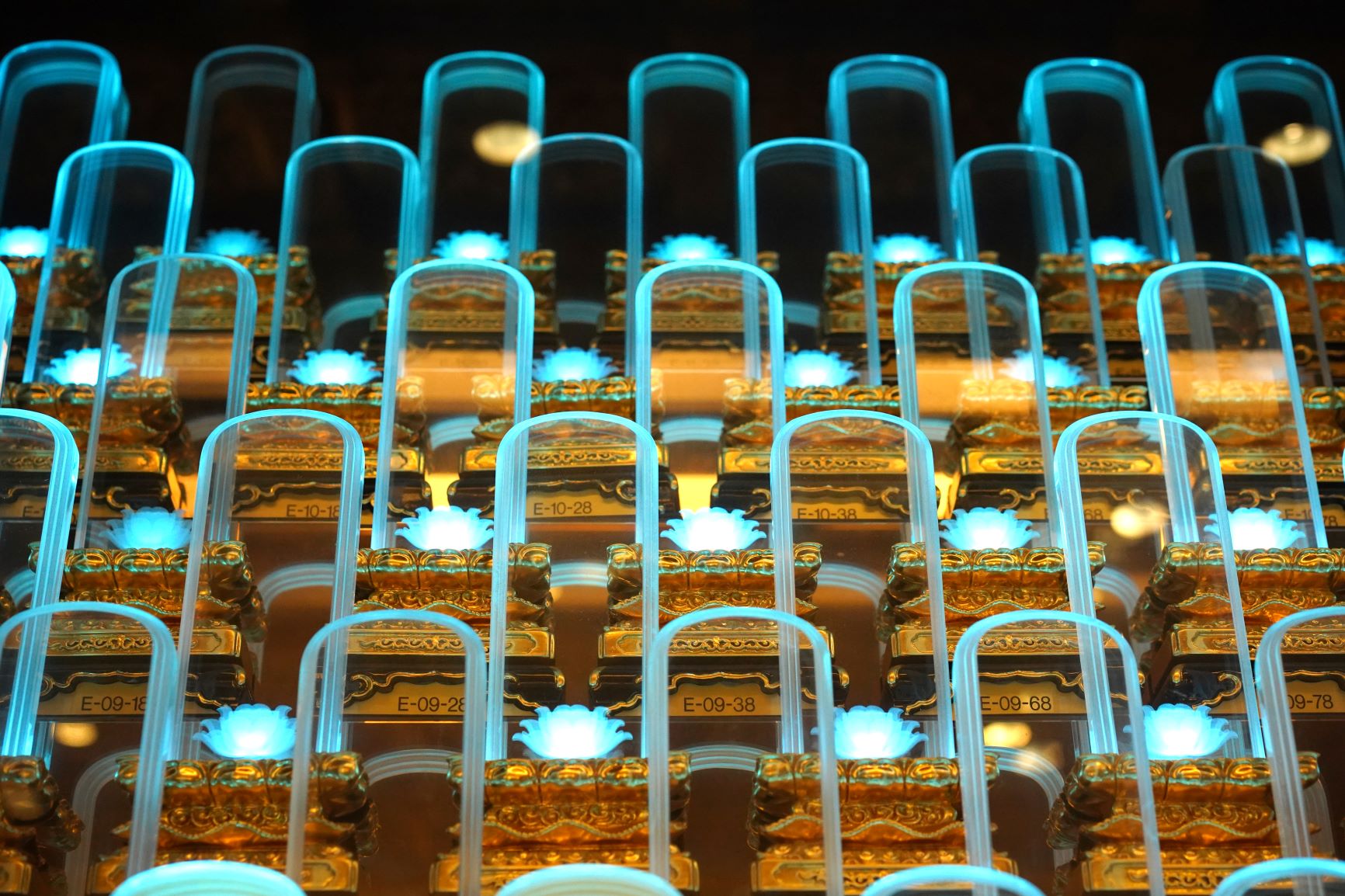
Built at a cost RM100 million, the Chamber of Eternal Bliss was designed to incorporate elements of the Brahma Palace’s design and recreate the artistic craftsmanship of the Aisle Hall. The Chamber of Eternal Bliss has a soaring hall with a rectangular caisson ceiling adorned with ornate and exquisite sculptural reliefs of lotus blossoms. The LED lighting system illuminates the the entire upper levels, creating a beautiful space that exudes wonder and majesty.
The lower hall is furnished with exquisite furnishings, comfortable and spacious lounge chairs and is fully air-conditioned; allowing visitors to take a break in a relaxed yet elegant environment.
The interior of the Chamber of Eternal Bliss features a mainly yellow theme which provides visitors with an impression of gold and splendour. However, in ancient times, yellow has a deeper significance. In addition to being the colour that represents imperial opulence, yellow represents “earth” which is the essence of all things. As such, the emperor is the essense of all people and thus also represents the supreme imperial power. Furthermore, in terms of the Five Elements of Yin and Yang, the yellow “earth” is paired with the red “fire” and “fire” produces “earth”, symbolizing nurture and growth.


Ming Palace is the convergence of architecture, Buddhism and culture. From the mandara caisson ceiling, Three Western Saints, apsaras, Buddhist statues and Zen spiritualism, to the eight cultural pillars depicting the Hundred Surnames of the Chinese, the idea of Buddhism and culture is integrated into the whole breathtaking complex and executed to the fullest extent.
From its exterior to its interior, the Ming Palace displays the immortal artistry and wisdom of thousands of years worth of Chinese culture. The attention-to-detail layout of Ming Palace makes it not only serene columbarium, but an excellent and wonderful example of Chinese culture and humanistic history. Just like history, when the finite mortal existence comes to an end, a new chapter begins.


What to do after a loved one passes away in Malaysia?
. If a loved one suddenly collapses and is unresponsive, and death has not yet been confirmed, you should first call 999 and follow the operator’s instructions.
We are getting more savvy at calculating – yet somehow, we never take this into account?
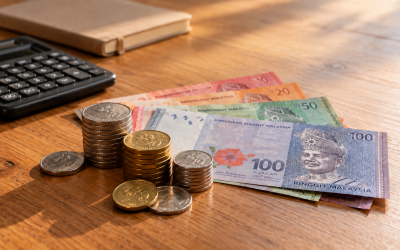
If your phone still works, you can hold off replacing it. You can skip the holiday trip. A thing you like can ultimately be left not purchased. However, end-of-life matters are a little different. Not pre-planning today doesn’t mean it won’t need to be handled in the future—it just defers the expense and the decision to an undetermined tomorrow.
A Farewell in Red: Understanding the “Celebratory Funeral” in Chinese Funeral Culture
What Is a Celebratory Funeral?
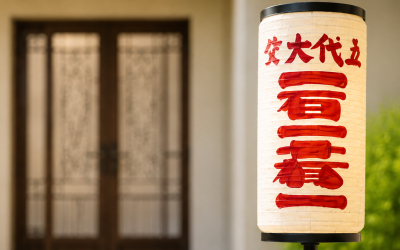
A Celebratory Funeral is a special form of Chinese funeral ceremony traditionally held for an elderly person who has reached an advanced age and passed away peacefully.
Rather than focusing solely on loss, the ceremony places greater emphasis on honouring the deceased’s longevity, blessings and contribution to the family.
The concept has existed in Chinese culture for generations. Historical writings from the Qing Dynasty describe Xi Sang as a funeral for someone considered to have enjoyed both good fortune and longevity.
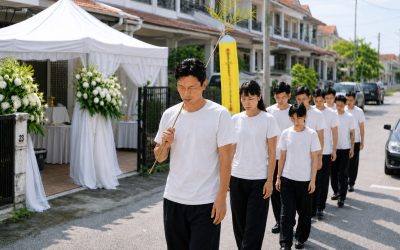
What Are “Carrying the Soul Banner” and “Buying Water” in Chinese Funerals?
In Hokkien Taoist funeral rites, after the Taoist priest begins the first-day ceremony by opening the altar and summoning the soul, a ritual of “bathing” and “offering food” is performed.
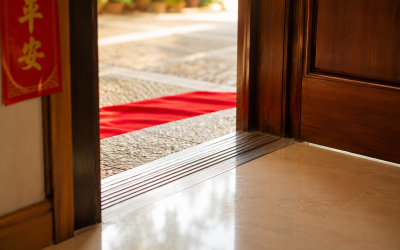
The Traditional Custom of “Bringing the Deceased Home as a Living Person” and the Modern Way of a Complete Farewell
For elderly family members who unfortunately pass away due to various circumstances, such as while travelling or in the hospital, the family may perform the custom known as “Bringing the Deceased Home as a Living Person”.
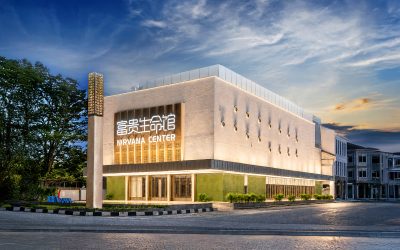
Nirvana Center Ipoh: A Jewel upon the Crown of the Tin Capital
Enter a theatre and you watch a fictional script; enter a memorial centre, and you witness real lives. Every farewell ceremony is like the premiere of a documentary. The departed is the protagonist, friends and relatives the audience. In a warm, bright memorial hall, people no longer only weep, but, amidst soothing music and fragrant flowers, look back on an ordinary yet great life.